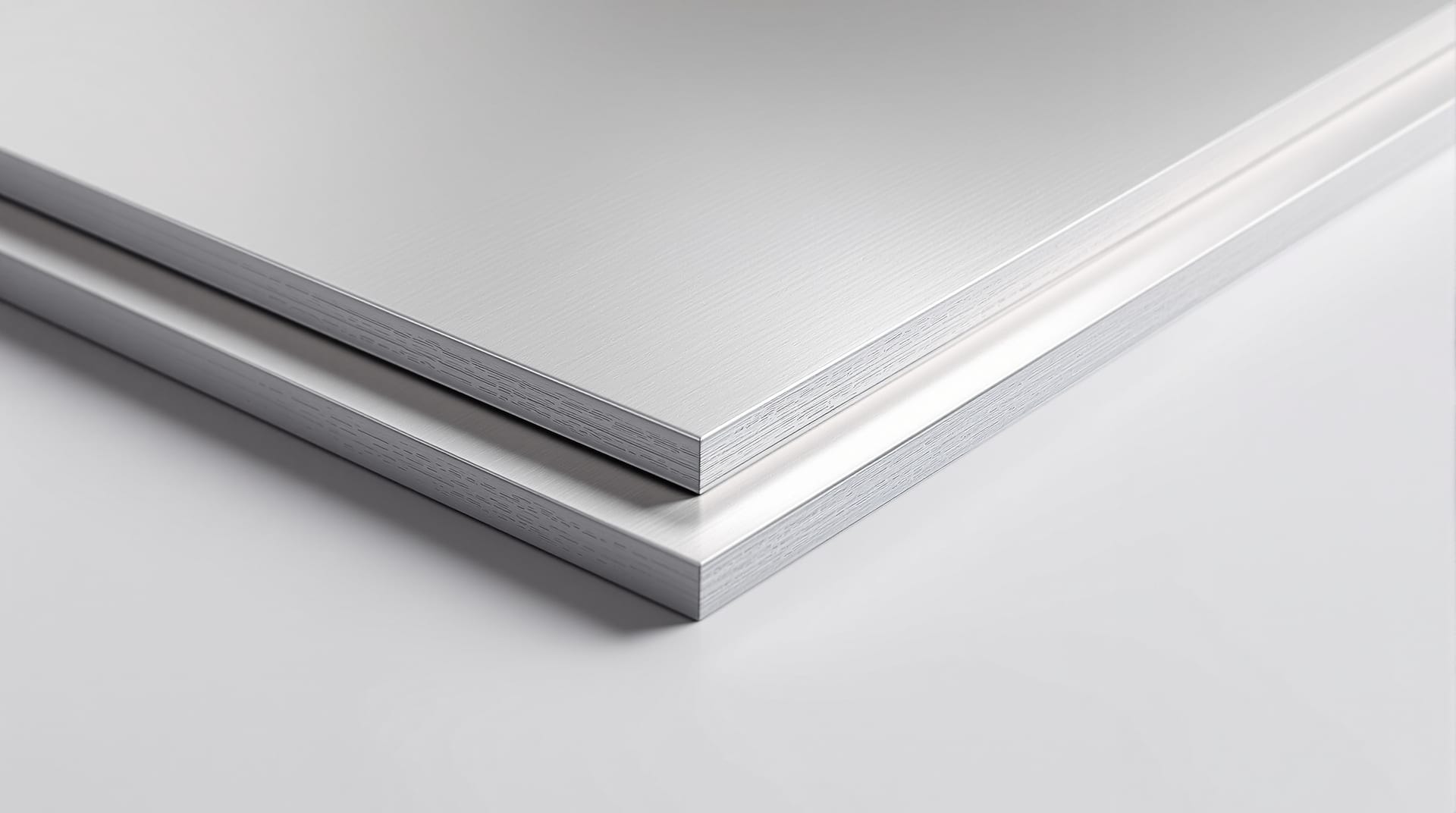
Aluminium sheet is the most-specified aluminium product and the one most often ordered wrongly, because three separate variables — thickness, alloy and temper — are all doing work and only the first one usually gets stated. A request for "1/8 inch aluminium sheet" leaves open whether the part needs to bend, be welded, be machined, or survive salt spray, and those answers point at different material.
Independent reference. This is an independent, non-commercial reference on metal forms, grades and mill processes. It sells nothing, quotes nothing and takes no orders, and it is not affiliated with any metal supplier, distributor or mill. See about this reference.
Thickness, gauge and the sheet/plate boundary
Aluminium sheet is sold by decimal thickness far more consistently than steel is, but gauge numbers still appear and they are not the same series used for steel. A given gauge number is a thinner piece of aluminium than it is of steel. The number also runs backwards — a higher gauge number means thinner material — which is a legacy of counting drawing operations rather than measuring anything, as explained under sheet metal.
Above roughly 0.250 inch, aluminium flat product is called plate rather than sheet, is produced on different equipment, and is quoted in fractional or decimal thickness only. Between about 0.006 and 0.019 inch it is called foil. The practical rule: state a decimal thickness, and treat any gauge number as a request to confirm it.
Alloys, by what the part has to do
- 3003 — soft, cheap, very formable, low strength. General enclosure panels, ductwork, flashing, trim. The default when nothing is structural.
- 5052 — the bending and marine alloy. Substantially stronger than 3003, forms to tight radii without cracking, and resists salt water well. Fuel tanks, boat hardware, truck bodies, anything that gets folded on a brake.
- 6061-T6 — the structural and machining alloy. Strong, weldable, machines cleanly, but in the T6 temper it is comparatively unforgiving in a tight bend. Brackets, machined plates, structural gussets.
- 5086 and 5083 — heavier marine alloys for hull and tank work where 5052 is not strong enough.
The alloy and temper designation system is maintained by The Aluminum Association; a fuller treatment of the temper suffixes is on the aluminium page.
Bending
Aluminium's minimum bend radius depends on alloy, temper and thickness together, and the penalty for getting it wrong is a cracked outside face rather than a slightly wrong angle. Two rules cover most work: bend across the rolling direction where you can, since a bend line parallel to the grain cracks first; and if a tight radius is essential in a hard temper, either specify the softer temper or ask for the material annealed.
Finishes
- Mill finish — as rolled, slightly dull, with visible roll marks and handling scuffs. Standard, cheapest, and entirely adequate under paint.
- PVC film — a peelable protective film applied at the mill to keep one face cosmetically perfect through fabrication. Worth specifying for anything visible.
- Anodised — an electrochemically thickened oxide layer, clear or dyed, hard and integral. Ordered as pre-anodised sheet or applied after fabrication; after fabrication is usually better, since anodising will not cover a cut edge.
- Painted and coil coated — factory-applied paint systems on coil, cut to size. Consistent colour across a whole job in a way that field painting cannot match.
- Tread (diamond) plate — a raised pattern rolled into one face for slip resistance on ramps, steps and trailer decks.
Cutting
Thin aluminium sheet shears cleanly. Thicker sheet and plate are usually sawn, routed or waterjet cut; plasma works but leaves a rougher edge on aluminium than on steel, and oxyfuel does not work on aluminium at all — the oxide melts far above the metal. Whatever the method, aluminium's low melting point means heat build-up shows up as a smeared, gummy edge rather than as discolouration, so speeds and lubrication matter more than they do in steel.
Handling
Aluminium sheet marks easily and permanently. Sliding one sheet across another puts fine scratches into both faces; a dropped corner dents rather than dings. Sheets ship interleaved or filmed for that reason, and the protective film should stay on through fabrication and come off at the last possible moment.